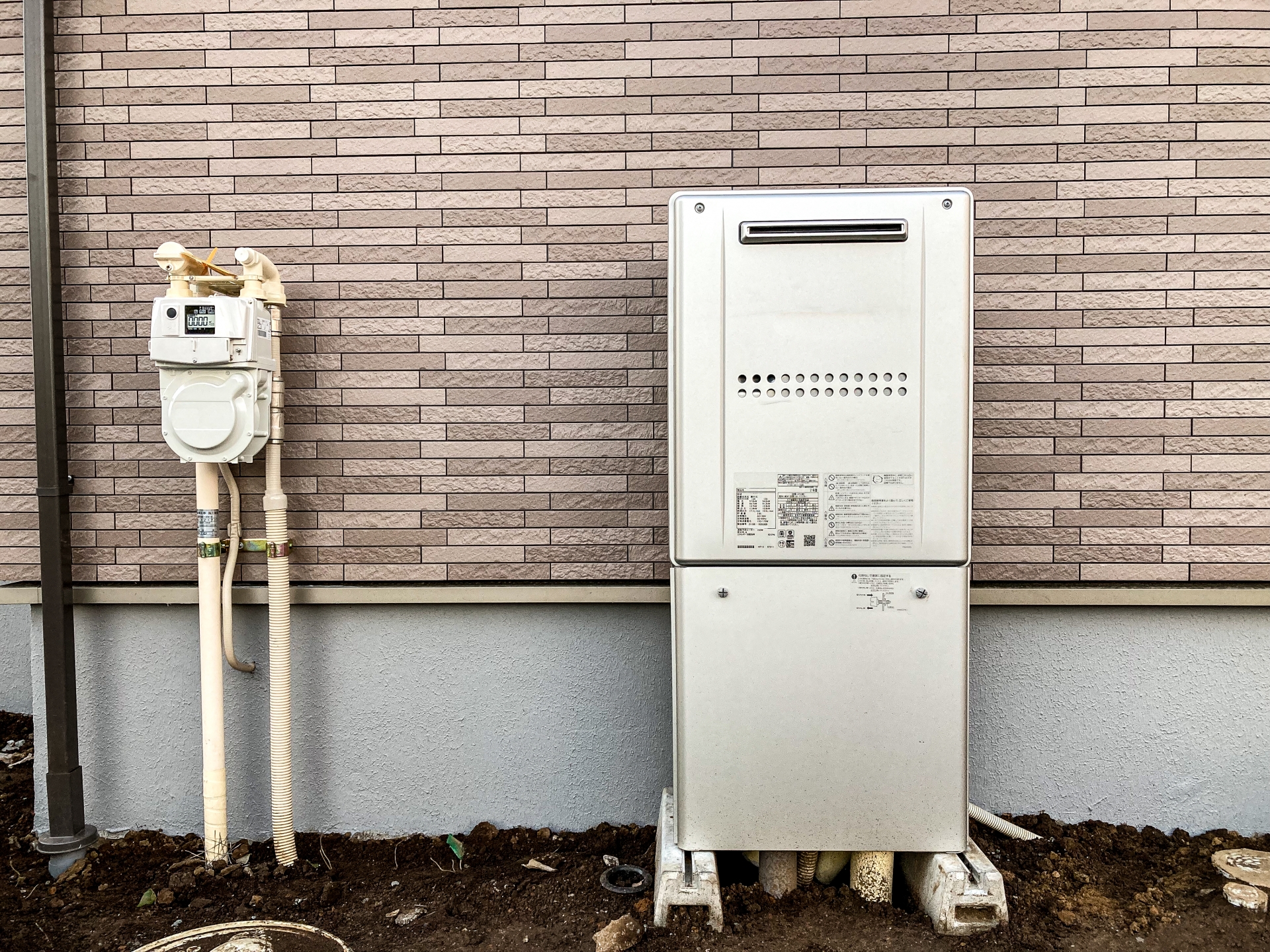
Types of Water Heaters
There are several types of water heaters, each with its unique features and advantages. Here are the main types:
1. Gas Water Heaters
Gas water heaters are the most common type in Japan. They use gas combustion to heat water, providing hot water quickly and efficiently. These are suitable for homes in areas with a stable gas supply, both natural gas and propane (LP gas) versions are available.
Advantages:
- Heats water quickly
- Easy temperature control
- Generally long-lasting with low running costs
Disadvantages:
- Gas expenses apply
- Requires installation work
2. Electric Water Heaters
Electric water heaters use electricity to heat water, storing it in a tank for later use. These are popular in all-electric homes, as they can take advantage of cheaper off-peak power rates, making them economical.
Advantages:
- Can lower electricity bills (with off-peak usage)
- High safety
- Relatively easy maintenance
Disadvantages:
- Risk of running out of hot water with consecutive use
- Requires space for the tank
3. EcoCute Heat Pump Water Heaters
EcoCute uses heat from the air to efficiently heat water, with environmentally friendly technology called heat pumps. While the initial cost is higher, EcoCute is a great option for those looking to save on long-term energy costs.
Advantages:
- Lower electricity bills
- Environmentally friendly
- Economical over the long term
Disadvantages:
- High initial cost
- Requires installation space
4. Oil-Fired Water Heaters
Oil-fired water heaters are widely used in colder regions or where gas supply is limited. They connect to an oil tank, so as long as you have fuel, they can consistently provide hot water. They perform especially well in cold areas, maintaining efficiency even in low temperatures.
Advantages:
- Performs well in cold climates
- Fuel can be easily replenished
Disadvantages:
- Fuel costs may rise
- Requires space for the oil tank
Main Features of Water Heaters
1. Reheating Feature
The reheating feature allows you to warm up bath water that has cooled, which is especially convenient during winter or when multiple people are bathing consecutively. This ensures that everyone can enjoy a warm bath without waiting.
2. Automatic Water Filling
Automatic water filling can fill your bathtub to a preset level at the touch of a button. This feature saves time and effort, making it easy to prepare a bath even when you’re busy.
3. Water-Saving and Energy-Saving Features
Some gas water heaters and EcoCute models include water-saving and energy-saving features, reducing excess energy consumption and helping to lower utility costs, all while being environmentally friendly.
4. Remote Control Operation
Many water heaters come with remote controls to adjust water temperature and settings. Installed in convenient locations like bathrooms and kitchens, these remote controls make it easy to operate the water heater, with some even including voice guidance.
Price Range of Water Heaters
The price of a water heater depends on the type and features. Typical price ranges are as follows:
- Gas Water Heaters: Approx. ¥100,000 to ¥300,000
- Electric Water Heaters: Approx. ¥200,000 to ¥500,000
- EcoCute Heat Pump Water Heaters: Approx. ¥400,000 to ¥800,000
- Oil-Fired Water Heaters: Approx. ¥200,000 to ¥400,000
Remember to Consider Installation Costs
Besides the main cost, installation is an additional expense for water heaters, typically around ¥20,000 to ¥100,000. Installation costs may vary depending on the need for piping or specific site requirements.
Leading Water Heater Manufacturers
Several trusted Japanese manufacturers produce reliable water heaters, each with unique technology and product lines. Here are a few of the major brands:
1. Rinnai
Rinnai is a leading manufacturer of gas water heaters in Japan, known for high quality and reliability. They are also proactive in energy-saving and eco-friendly technology.
2. Paloma
Paloma specializes in gas appliances, including water heaters and gas stoves. Their products are renowned for their safety and durability, and they offer a wide range of products compatible with both natural and LP gas.
3. Noritz
Noritz manufactures a range of appliances, including EcoCute and electric water heaters. Known for energy efficiency and advanced remote control options, Noritz offers versatile options to suit various household needs.
4. Daikin
Famous for air conditioners, Daikin is also highly regarded in the EcoCute market. Leveraging their expertise in heat pump technology, Daikin’s water heaters are both energy-efficient and effective.
5. Panasonic
Panasonic focuses on electric and EcoCute water heaters, ideal for all-electric homes. Their models are known for durability and design, with convenient remote control and energy-saving functions.
How to Choose a Water Heater
Here are the key points to consider when selecting a water heater:
1. Check Your Environment and Energy Source
Consider the energy source available in your area and your home’s setup (natural gas, LP gas, or all-electric), as it determines the type of water heater you can choose.
2. Capacity for Your Household Size
The amount of hot water you need will vary depending on your household size and usage. Large families may need a high-capacity gas heater or EcoCute, while a smaller, more economical model might suffice for a single person or a couple.
3. Balance Initial and Running Costs
Advanced water heaters with extra features are usually more expensive initially but can reduce running costs over time. When choosing, consider both the upfront cost and estimated energy expenses to find the best long-term solution.
4. Look for Eco-Friendly and Energy-Efficient Options
Choosing an energy-efficient model, like EcoCute, can lower your utility bills. Models with eco-labels or energy-saving certifications are better for both your budget and the environment.
Summary: Choosing the Right Water Heater
Selecting the right water heater depends on factors like type, price, installation requirements, and capacity to suit your family’s needs. Think carefully about your home’s energy source, household size, and cost considerations to find the best match. Knowing each brand’s strengths and features will also help you choose a reliable water heater that enhances your daily life.
Frequently Asked Questions (FAQ)
1. Q: How long do water heaters last?
A: Generally, water heaters last around 10–15 years. However, with proper maintenance, they can last even longer.
2. Q: What are the signs that a water heater needs replacement?
A: Signs include water leaks, unusual noises, and unstable water temperature. These may indicate it’s time for a replacement.
3. Q: Which water heater is best for an all-electric home?
A: EcoCute is highly recommended for all-electric homes, as it can significantly reduce electricity costs.
4. Q: Are there subsidies available for installing a new water heater?
A: Some local governments offer subsidies for eco-friendly water heater installations. It’s worth checking your area’s support programs.
5. Q: How often should I service my water heater?
A: Annual maintenance is typically recommended. Regular servicing helps prolong the life of your water heater.